How to pick your first generative AI project that actually delivers value
Start with the right problem, not the technology
Generative AI can feel like a solution in search of a problem. Many teams jump in by asking "What can this model do?" instead of "What work do we need to do better?" The difference matters. A project that starts with a vague goal like "explore AI" usually ends with a demo that nobody uses. A project that starts with a specific, boring, repetitive business process has a real chance of becoming part of how people work every day.
This article walks through a short set of checks to run before you commit time and effort to a generative AI project. The checks are designed for professionals who want to build something useful in a short time - for example, during a two-day classroom course like the one at workforcelearning.unitedceres.edu.sg. The focus is on picking a use case that is small enough to finish, safe enough to try, and valuable enough that someone will actually use what you build.
Check 1 - Is the task repetitive and rule-bound?
The best candidates for a first generative AI project are tasks that people do over and over, following a clear pattern. Think of drafting a standard email response, summarising a weekly report, or extracting key details from a customer inquiry. These tasks consume time without requiring deep creativity. A generative AI model can learn the pattern and produce a first draft that a person then reviews.
Why this matters: a repetitive task gives you a clear baseline. You can measure how long it takes a person to do it now, and how long it takes with AI assistance. That makes it easy to see if the project actually saves effort. If the task is different every time, or requires specialised judgment, you are better off leaving it for a later project when you have more experience.
Check 2 - Can you get a handful of good examples?
Generative AI models learn from examples. If you cannot find three to five real examples of the input and the desired output, the project will struggle. The examples do not need to be perfect. They just need to show what a reasonable answer looks like. For instance, if you want the model to rewrite technical notes into simple language, gather a few notes and their plain-language versions.
Without examples, you have no way to test whether the model is doing what you want. You also have no way to show a colleague or a manager what the project will produce. A small set of examples is the cheapest, fastest way to validate the idea before you write any code.
Check 3 - Is there a process owner who wants this?
A project without a process owner is a project that will sit on a shelf. The process owner is the person who does the task every day, or the person whose team does it. They need to want the output. Not "It would be nice if someone built this", but "I would use this next week if it worked."
Talk to the person who does the work. Ask them what parts of the task they find tedious. Ask what they would change if they could. Their answers will tell you whether the project addresses a real pain point or just an abstract idea. The best generative AI projects solve a problem that someone has already tried to solve with a spreadsheet, a template, or a shared document.
Check 4 - What happens when the model gets it wrong?
Generative AI is not perfect. It will produce mistakes, sometimes subtle ones. Before you start, decide how much error is acceptable. If the output goes directly to a customer without review, even a small mistake can damage trust. If the output is a first draft that a person checks before sending, a mistake is much less serious.
For a first project, choose a task where a human stays in the loop. The model drafts, the person approves. That way you get the speed benefit without the risk. It also gives you a natural feedback loop: every time the person edits the draft, you learn what the model gets wrong and can improve it.
Check 5 - Can you finish it in two days?
This check is the hardest for many teams. A first project should be small enough to build and test in a short, focused period. If the project needs data that does not exist, or requires approval from three departments, or depends on a system that nobody can access, it is not a first project. It is a future project.
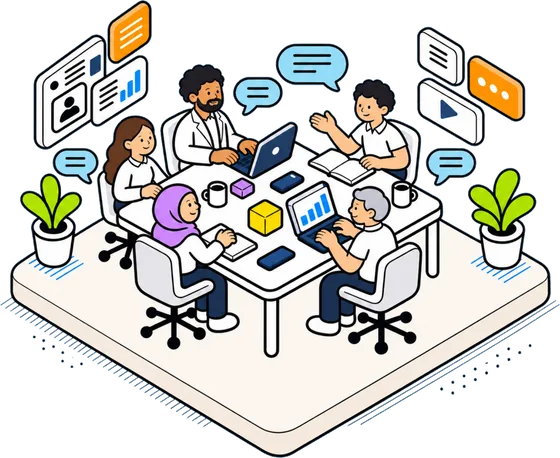
A two-day scope means picking something that uses a single input, produces a single output, and runs on a simple interface. For example: a tool that takes a short description of a customer issue and drafts a reply in the company tone of voice. Or a tool that takes meeting notes and produces a bullet-point summary. These are small enough to build in a classroom setting and useful enough to show results on Monday morning.
This is exactly the kind of scope that a course like the one at workforcelearning.unitedceres.edu.sg is designed for. The structure of a short, hands-on programme forces you to make decisions quickly and focus on what matters: picking the right use case, preparing a few examples, and building something that works end to end.
Check 6 - Is the data safe to use?
Before you feed any information into a generative AI model, ask whether it contains personal data, confidential business information, or anything that should not leave your control. Many public models store and learn from the data you send. Even private models can be a risk if the data is sensitive.
For a first project, pick a task that uses only public or anonymised data. If the real task requires customer names or financial details, create a mock version with fake data for the prototype. Once you prove the concept, you can work with your IT team to set up a secure way to handle real data. Never skip this check. A data breach or a compliance issue will stop the project and damage trust in generative AI across your organisation.
Check 7 - Do you have a way to get feedback?
Building the tool is only half the work. The other half is learning whether it actually helps. Set up a simple way to collect feedback from the people who use it. It can be as simple as a shared document where they note what worked and what did not, or a short form after each use.
Feedback tells you what to improve. It also builds momentum. When people see that their comments lead to changes, they become invested in the tool's success. Without feedback, you are flying blind. A first project that nobody uses is a learning experience, but a first project that someone uses and improves is a foundation for the next one.
Putting the checks together
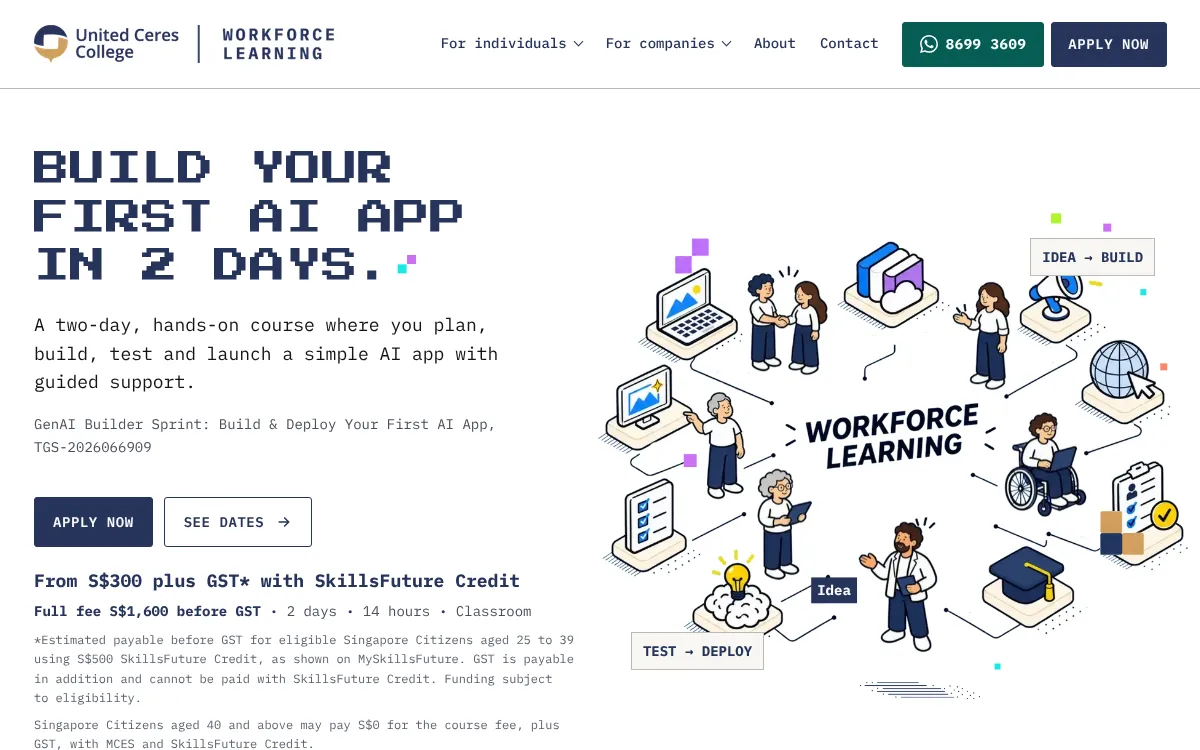
The seven checks form a practical filter. Run any potential project through them before you invest time. If the project passes all seven, you have a strong candidate. If it fails on data safety or the need for a human in the loop, look for a different use case. If it fails on repetitiveness or availability of examples, gather more information or pick something else.
The goal is not to find the perfect project. It is to find a project that is small enough to finish, safe enough to try, and valuable enough that someone wants the result. That is the kind of project that builds confidence and skills. And that is the kind of project that makes a generative AI course a genuine return on effort, not just a certificate on the wall.